KDSBT
We Specialize in
Facial
People get facials for different reasons: some people want those horrible blackheads out! Others start taking care of their skin in their 20s to preserve a youthful look. Older people want some help with anti-again regimens. And then there are the people who just want to relax and be pampered. These are all fine reasons to get facials. But often the facial itself is a bit mysterious. What does the steam do? Why do they keep putting creams on and taking them off? Why get facials regularly? A facial is essentially a multi-step skin treatment that is one of the best ways to take care of your skin. A facial cleanses, exfoliates, and nourishes the skin, promoting a clear, well-hydrated complexion and can help your skin look younger. You also receive advice on the best way to take care of your skin. A facial works best when it is part of an on-going program of skin care. It is best to find an experienced, knowledgeable licensed esthetician who has special training in skin care and is knowledgeable, fastidious, and passionate about her work. Legally, a cosmetologist is allowed to give facials, but their primary training is in hair, so they might not be the best choice. There is also a trend toward dual-licensed therapists, where the person is licensed to give both massage and facials. Be on the lookout for this in a resort setting, especially if you'd rather go to someone who gives facials all the time. A facial is the second most popular spa treatment after a massage . The Basic Steps of a Facial ••• Consultation. A facial should begin with a consultation. You might fill out a form with questions about your skin concerns, your diet, how much water you drink, which drugs and supplements you take, and products you are currently using. Retin-A and other drugs can affect your skin and what kind of treatments the esthetician recommends. '.
Pedicure
A pedicure in progress A pedicure is a cosmetic treatment of the feet and toenails , analogous to a manicure. Pedicures are done for cosmetic, therapeutic purposes. They are popular throughout the world, and especially among women. Pedicures include care not only for toenails; dead skin cells are rubbed off the bottom of the feet using a rough stone (often a pumice stone) or other material. Skin care is often provided up to the knee, including granular exfoliation, moisturizing , and massage . The word pedicure is derived from the Latin words pedis, which means "of the foot", and cura , which means "care". '.
Skin care
Human skin color ranges in variety from the darkest brown to the lightest hues. An individual's skin pigmentation is the result of genetics , being the product of both of the individual's biological parents ' genetic makeup. In evolution, skin pigmentation in human beings evolved by a process of natural selection primarily to regulate the amount of ultraviolet radiation penetrating the skin, controlling its biochemical effects. [1] The actual skin color of different humans is affected by many substances, although the single most important substance is the pigment melanin . Melanin is produced within the skin in cells called melanocytes and it is the main determinant of the skin color of darker-skinned humans. The skin color of people with light skin is determined mainly by the bluish-white connective tissue under the dermis and by the hemoglobin circulating in the veins of the dermis. The red color underlying the skin becomes more visible, especially in the face, when, as consequence of physical exercise or the stimulation of the nervous system (anger, fear), arterioles dilate. [2] Color is not entirely uniform across an individual's skin; for example, the skin of the palm and the sole is lighter than most other skin, and this is especially noticeable in darker-skinned people. [3] There is a direct correlation between the geographic distribution of ultraviolet radiation (UVR) and the distribution of indigenous skin pigmentation around the world. Areas that receive higher amounts of UVR, generally located closer to the equator, tend to have darker-skinned populations. Areas that are far from the tropics and closer to the poles have lower intensity of UVR, which is reflected in lighter-skinned populations. [4] Researchers suggest that human populations over the past 50,000 years have changed from dark-skinned to light-skinned and vice versa as they migrated to different UV zones, [5] and that such major changes in pigmentation may have happened in as little as 100 generations (≈2,500 years) through selective sweeps. [5][6][7] Natural skin color can also darken as a result of tanning due to exposure to sunlight . The leading theory is that skin color adapts to intense sunlight irradiation to provide partial protection against the ultraviolet fraction that produces damage and thus mutations in the DNA of the skin cells. [8][9] In addition, it has been observed that adult human females on average are significantly lighter in skin pigmentation than males . Females need more calcium during pregnancy and lactation. The body synthesizes vitamin D from sunlight, which helps it absorb calcium. Females evolved to have lighter skin so their bodies absorb more calcium. [10] The social significance of differences in skin color has varied across cultures and over time, as demonstrated with regard to social status and discrimination . '.
Waxing
Waxing is a form of semi-permanent hair removal which removes the hair from the root. New hair will not grow back in the previously waxed area for four to six weeks, although some people will start to see regrowth in only a week due to some of their hair being on a different human hair growth cycle. Almost any area of the body can be waxed, including eyebrows, face, pubic area (called bikini waxing), legs, arms, back, abdomen, knuckles and feet. There are many types of waxing suitable for removing unwanted hair. Types Male chest before and after waxing. Strip waxing (soft wax) is accomplished by spreading a wax thinly over the skin. A cloth or paper strip is applied and pressed firmly, adhering the strip to the wax and the wax to the skin. The strip is then quickly ripped against the direction of hair growth, as parallel as possible to the skin to avoid trauma to the skin. This removes the wax along with the hair. There are different forms of strip waxing or soft waxing: heated, cold or pre-made strips. Unlike cold waxing, heated wax is spread easily over the skin. Cold waxing is thicker, which makes it more difficult to spread smoothly over the skin. Pre-made strips come with the wax on them, and they come in different sizes for different area uses. [1] Stripless wax (as opposed to strip wax), also referred to as hard wax[2], is applied somewhat thickly and with no cloth or paper strips. The wax then hardens when it cools, thus allowing the easy removal by a therapist without the aid of cloths. This waxing method is very beneficial to people who have sensitive skin. Stripless wax does not adhere to the skin as much as strip wax does, thus making it a good option for sensitive skin as finer hairs are more easily removed because the hard wax encapsulates the hair as it hardens. The stripless waxing method can also be less painful. Contraindications The following factors are known to make those who are waxed more prone to "skin lifting," where the top layer of skin is torn away during waxing treatment: Taking blood-thinning medications; Taking drugs for autoimmune diseases, including lupus; Taking prednisone or steroids; Psoriasis, eczema, or other chronic skin diseases; Recent sunburn; Recent cosmetic or reconstructive surgery; Recent laser skin treatment; Severe varicose leg veins ; Rosacea or very sensitive skin; History of fever blisters or cold sores (waxing can cause a flare-up); Using Trevino, Tazaronene, or any other peeling agent; Recent surgical peel, microdermabrasion or chemical peel using glycolic, alpha hydroxy, salicylic acid , or other acid-based products. There are many benefits to waxing versus other forms of hair removal. It is an effective method to remove large amounts of hair at one time. It is a long-lasting method, as hair in waxed areas will not grow back for two to eight weeks. When hair is shaved or removed by depilatory cream , the hair is removed at the surface rather than the hair root. Within a few days, the hair can reappear back at the surface. With these methods, hair tends to grow back in a rough stubble. Areas that are repeatedly waxed over long periods of time often exhibit regrowth that is softer. There are many drawbacks of waxing as well. Waxing can be painful when the strip is removed from the skin. Although the pain is not long-lasting, it can be intense, particularly in sensitive areas. Another drawback to waxing is the expense: waxing is usually performed by a licensed esthetician and in some cases the cost can be high, depending on the area waxed and the number of sittings required. There are do-it-yourself waxing supplies, but they may be difficult to use on oneself on some areas on the body. Another drawback of waxing is that some people experience ingrown hairs, red bumps, and minor bleeding. This is more likely to occur when waxing areas with thick hair, especially the first few times when follicles are strongest. '.
Nice hair do
Giving you a better hair do, Brazillian hair, and so on!'
Also giving you a perfect Wedding Ceremony
At KDSBT, we cherish your Wedding Ceremony's.
Steps in Our Works
Our process on having a great wedding ceremony.1. Hint us
Get in touch with us for various types of wedding planning.
2. Choose
Choose which of the services you want.
3. Payment
Get us paid for the services to be rendered.
4. FINALIZE
Then, we get your job done!.
Smart, Creative & Awesome.
A creative agency that believes in the power of creative ideas and great design.


Meet The Man
A man with vision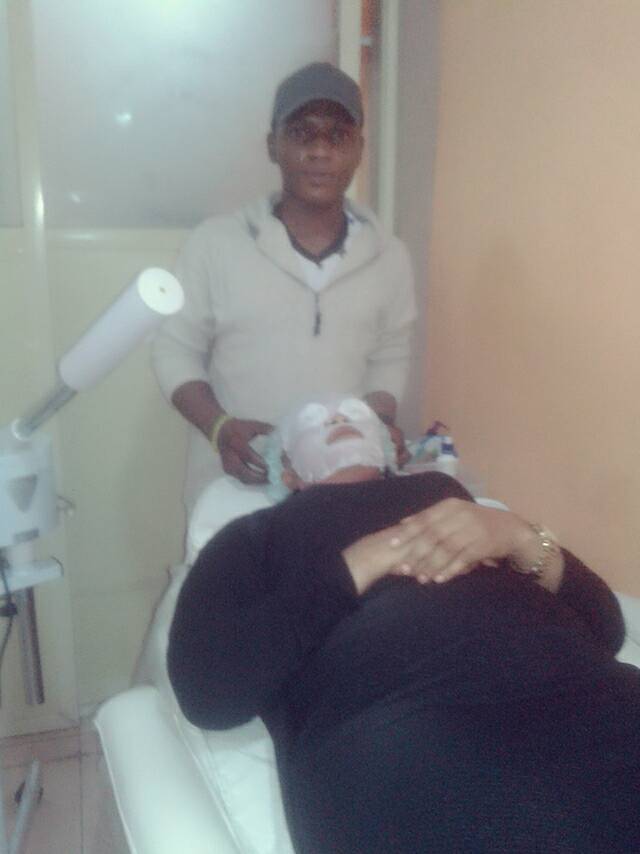
Stephen
C. E. O.Stephen is a man of virtue's.
Get in Touch
Feel free to contact us-
Itoki, Ogun State, Nigeria
-
stevyork4oludairex@gmail.com
-
(+234)7069559436